
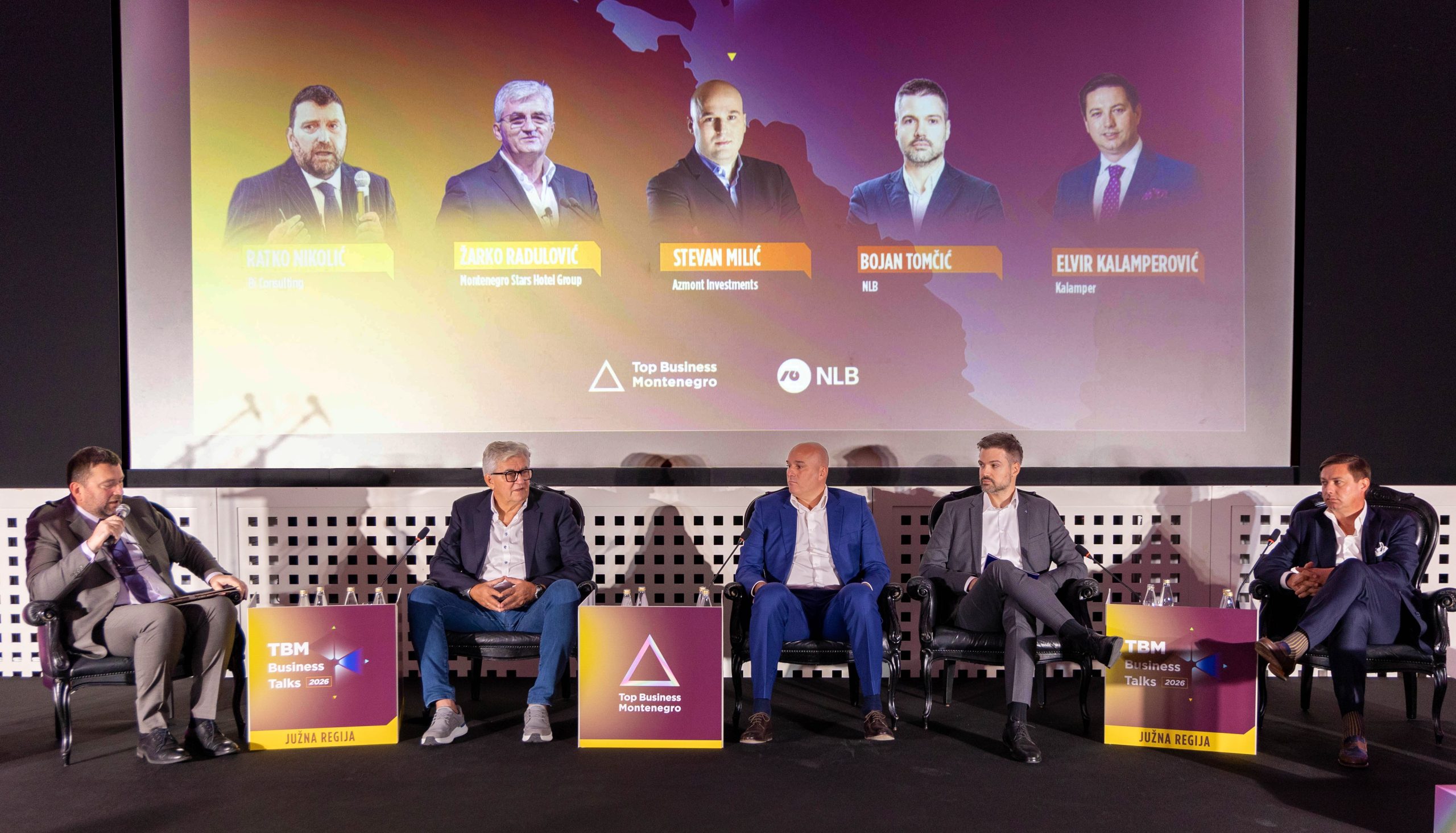
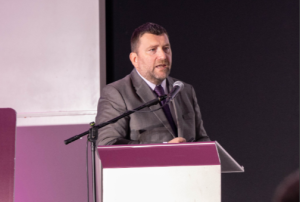
The panel moderator, BI Consulting founder Ratko Nikolić, pointed out that sustainable business and successful companies already go hand in hand, and that sustainability is embedded in future development plans.
“However, without adequate and timely support from local and national authorities, it is difficult to achieve the full potential,” Nikolić said.
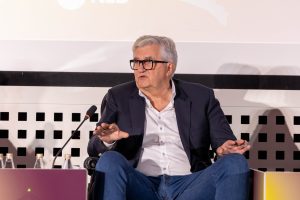
Founder and co-owner of Montenegro Stars Hotel Group Žarko Radulović said that Montenegro has achieved far less than it could have over the past 24 years, during which he has been active in the tourism industry. In his view, the primary reason is an insufficient understanding of tourism as a driver of development.
“We need to start from the beginning and, first and foremost, educate people and the wider community about what tourism actually means,” Radulović said.
He particularly highlighted changes in the business environment and the conditions under which major projects are implemented. As an example, he cited his own experience with Hotel Splendid, saying that under today’s conditions he would not be able to build it.
“Today, building is much more difficult and expensive because all incentives for potential investors have been abolished. The costs are enormous, as is the pressure of public opinion. Unlike when we started our business, today decisions and solutions need to be made quickly in order to move forward. That is why, if I were building Splendid today, I do not think I would be able to complete it,” Radulović said.
Radulović identified spatial management as one of the key challenges, stressing that planning is an economic category par excellence. For new investments, he believes that system predictability and certainty that business conditions will not change once capital has already been invested are crucial.
“Investors should have a guarantee that they will operate under the same conditions for at least five years. That is the fundamental prerequisite determining how, who and when someone will come to invest, and how much they will invest. Sustainability is everything,” Radulović said.

Stevan Milić, Commercial Director at Azmont Investments, pointed out that Portonovi, viewed as a self-contained ecosystem, operates successfully and has introduced standards that Montenegro had not previously seen on such a scale. However, in his view, the success of a single project is not enough for Montenegro to become a fully developed high-end tourism destination.
Milić believes that Montenegro has the potential to make a major development leap, but that realizing this potential requires a more efficient system in which decisions are made in a timely manner, as time is one of the key resources for investors.
“We can achieve remarkable results in a very short period of time thanks to the beauty of this country and its potential,” Milić said.
He also stressed the need for stronger cooperation between the government and the private sector and for alignment on the country’s long-term development direction.
“We need to have one direction that everyone agrees on, to cooperate and develop joint strategies. The green agenda cannot be driven by the private sector alone; it needs to be addressed at the highest level,” Milić said.
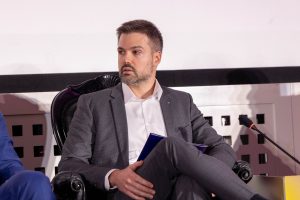
Bojan Tomčić, Deputy Director of Corporate Banking at NLB Bank, said the bank is particularly interested in projects involving strong international operators and brands, as well as other developments that can contribute to generating economic activity throughout a larger part of the year.
“Given that we are a small country with less than 300 kilometres of coastline, we need to think carefully about the kind of value we create within a limited space. We should not focus solely on the number of guests and new capacities, but on how to increase the value each guest brings to the destination, extend the season, and create functional and attractive offerings throughout a larger part of the year,” Tomčić said.
He identified underdeveloped infrastructure as one of the key constraints on further growth. According to Tomčić, NLB Bank’s interest is to direct capital towards projects backed by reputable and high-quality investors, with a clear economic rationale and sustainable financial structure, and which can create long-term value for Montenegro’s economy.
“We can build the best hotels, but if we do not have roads, airports and water supply systems capable of supporting that development, infrastructure can become a limiting factor for further growth and development,” Tomčić said.
According to him, NLB offers credit lines for green investments. He highlighted the EBRD Go Green programme for small and medium-sized enterprises, through which investors can receive a reimbursement of up to 15% of the investment amount after implementation, along with technical support. He also discussed a credit line for individuals investing in the energy efficiency of their homes, offering a lower interest rate and the possibility of grants of up to 20% of the loan amount.

Elvir Kalamperović, founder of the Bar-based company Kalamper, highlighted the development opportunities of the southern region, particularly in Bar and Ulcinj. According to him, Bar has a particular development advantage due to its port, road and rail connections, as well as the fact that the city remains active throughout the year. He also pointed to Velika Plaža in Ulcinj and numerous coastal areas whose potential has yet to be fully utilised. Nevertheless, infrastructure remains a key challenge for this part of the coast as well.
“There is space for development, but the biggest problem is infrastructure, which is holding back the development of the southern region. I hope we will make progress in this area through communication between local and national authorities and the business community,” Kalamperović said.
Speaking about sustainability, Kalamperović also highlighted concrete steps his company is already taking, noting that electric vehicle charging stations have been installed at the company’s petrol stations and hotels for the past two years. Regarding the relationship between development and spatial planning, he said the goal should be more green spaces, cleaner air and less excessive construction, in order to leave greater value for future generations.
During the panel, a predictable regulatory framework, infrastructure capable of supporting investment, more responsible spatial management and stronger cooperation between the national government, local authorities, the financial sector and the business community emerged as key prerequisites for the next phase of development. The focus, participants concluded, should no longer be solely on the volume of new investment, but also on its quality and the long-term value it creates for the economy and the community.
The panel “Between Investment Momentum and Sustainable Development” was held as part of the second regional edition of TBM Business Talks, through which Top Business Montenegro uses data and dialogue with the business community to address the development potential and challenges of different regions of Montenegro.

