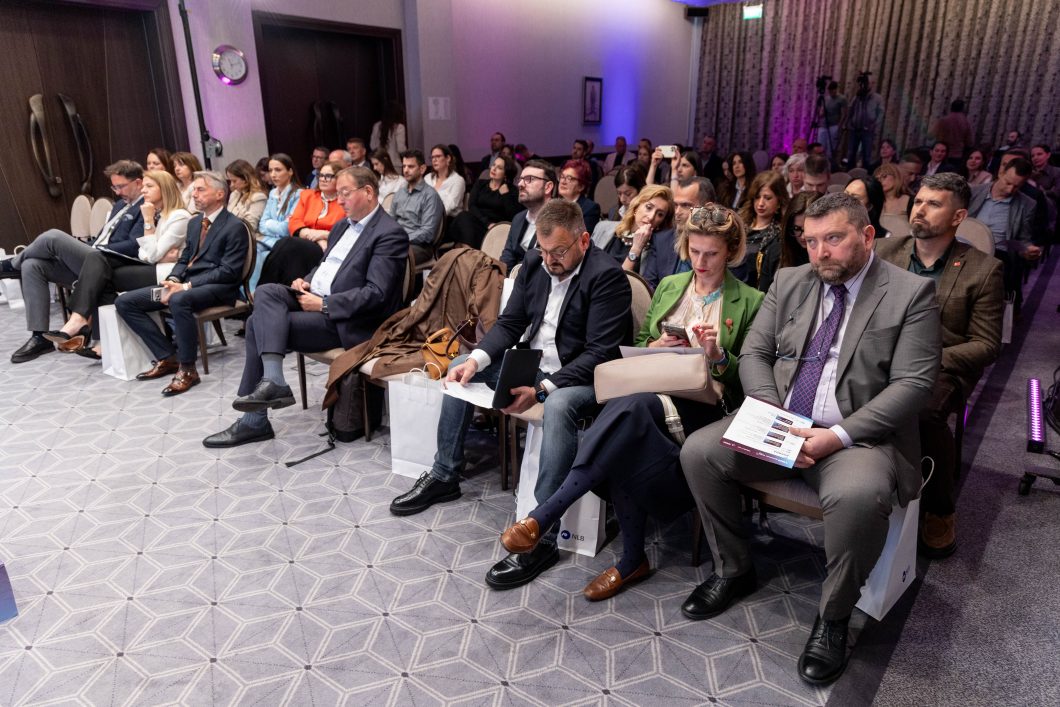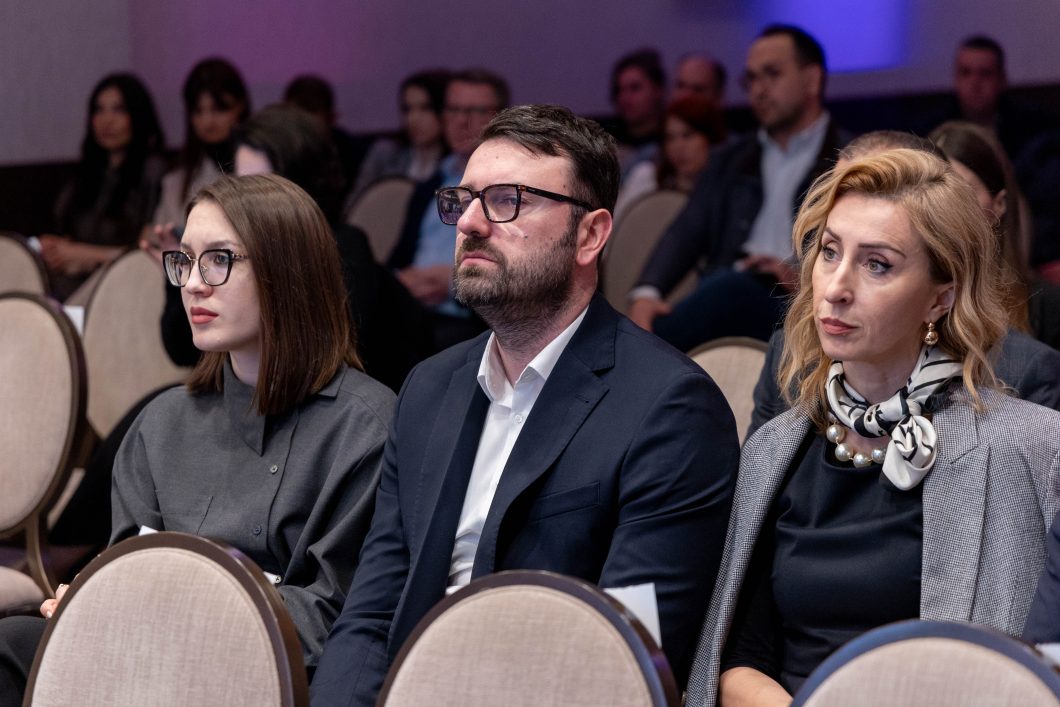
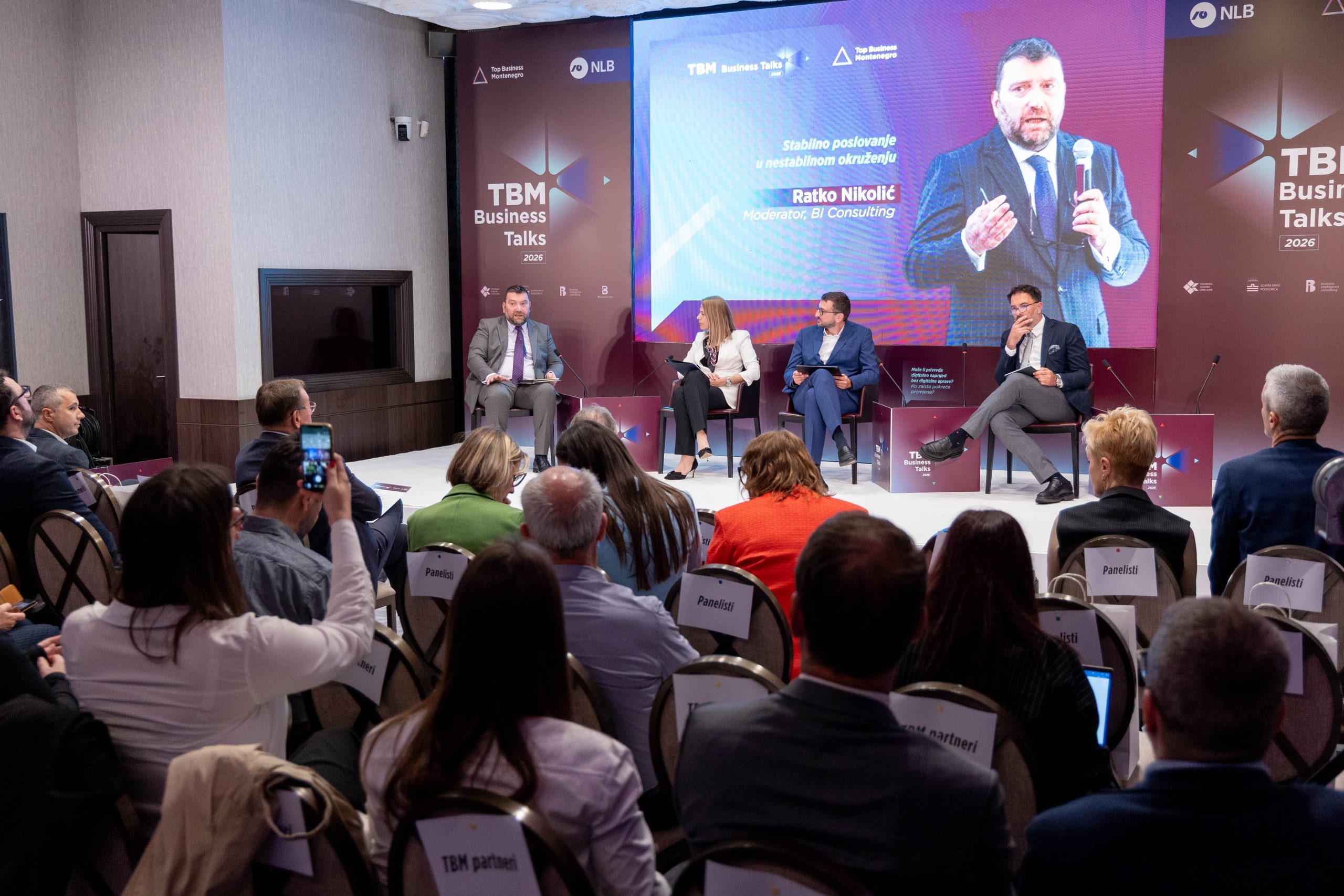
President of the Chamber of Commerce, Nina Drakić, pointed out that the instability of the business environment in Montenegro stems from a combination of global and domestic factors, but that an additional problem is the internal unpredictability of the system.
“The business environment is not predictable; we are living in a time when we are on a fast track to the European Union, and the dynamics of alignment with EU policies require harmonization of laws and regulations,” said Drakić.
She emphasized that the same challenges have been repeating for years, such as the grey economy, labor shortages, and inefficient public administration, which indicates deeper structural problems. Drakić stressed that businesses do not need absolute stability, but rather clear and consistent rules of the game and strong institutions that ensure equal enforcement.
“The state must provide a predictable business environment that allows companies to plan their operations, so that within two or three months there are no changes in tax regulations that would affect their plans, or pressures on businesses to change wage costs through certain fiscal measures,” she said.
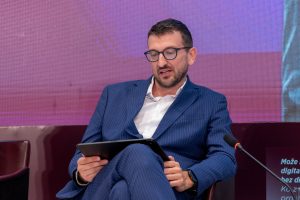
A similar view was shared by Marko Čelebić from NLB Bank, who sees a stable financial sector as an important, but not sufficient, condition for overall economic stability.
“Everything depends on everything else—a stable financial sector can drive the economy, and vice versa,” said Čelebić.
He believes that Montenegro, despite the challenges, is on the right track and that the business environment is favorable.
“Montenegro will be the next EU member, which will open up opportunities for business—the legislation is increasingly aligned with the EU acquis. Therefore, the environment today is positive. Montenegrin companies are becoming more competitive and sustainable, standards are rising, and sustainability is increasingly discussed,” Čelebić emphasized.
However, as he noted, the key remains the predictability of fiscal and regulatory policy. He believes it is necessary to create a business environment in which domestic companies will be competitive in EU countries, and this is where the Government plays a crucial role. He also highlighted the importance of cooperation between banks, investment funds, and entrepreneurs in creating an environment that enables clients to access multiple funding sources.
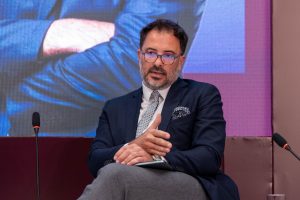
Mladen Grgić from the Faculty of Political Sciences provided a broader context, noting that we live in a world full of uncertainty and that global instability is the new reality.
“This is not a cliché but a standard. We have experienced crisis after crisis, and they will continue. Processes opposite to those of the past 30 years are taking place. There is an ongoing fragmentation of the international economy, with supply chains increasingly focusing on regional levels,” said Grgić.
He believes that we cannot expect a more favorable international environment, but in such conditions, the state must play a stabilizing role.
“If there are exogenous factors that are unpredictable, then it would be good for the state to be predictable. Recently, French President Emmanuel Macron said that the advantage of EU membership is that it makes them more predictable than before. Predictability of state institutions is definitely the key word,” Grgić emphasized.
He also warned about specific shortcomings of the system, namely the inability to minimize risks and ensure a secure environment.
“In a system that is unstable, the state should be stable. We cannot protect ourselves from risks, but the state definitely should not create risks for its own enterprises,” Grgić concluded.
TBM Business Talks was organized by the Top Business Montenegro initiative with the aim of offering concrete answers to the most important challenges of modern business in Montenegro through open dialogue among representatives of the business sector, institutions, the financial sector, and the IT community.