

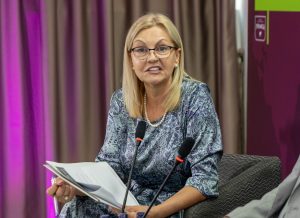
Nemša Omerhodžić, Director of Merkator International from Bijelo Polje and moderator of the panel titled “Northern Montenegro: From Potential to an Investment Destination – The Business Perspective: What Is Needed for Stronger Business Development”, assessed that the region possesses significant resources, hardworking people and considerable development potential, but that these factors alone are not enough.
“The key question is how to create conditions for increased investment, the opening of new jobs, the development of domestic companies and the retention of people who want to build their future here,” Omerhodžić said.
Some of the potential solutions were presented by panel participants Miljan Šestović, Director of the Research Department at the Chamber of Economy of Montenegro; Ivan Bauk, Director of Corporate Banking at NLB Bank; and Hasan Ramović, Executive Director of Put-Gross.

Šestović warned that the greatest obstacles to economic development in the north are the shortage of labour and limited access to financing.
“Unfavourable demographic trends, emigration and an ageing population are particularly affecting the north. At the same time, access to financing has been the lowest-rated segment of the business environment since 2023, and this problem is more pronounced here than in other parts of the country,” Šestović said.
He noted that the northern region accounts for only five to seven per cent of Montenegro’s total revenue and profit, although half of the country’s municipalities are located in the north and are home to one quarter of its population.
“We must offer investors something in order to create opportunities for economic activity here,” Šestović emphasised, identifying political and macroeconomic stability, a predictable business environment, more substantial subsidies for companies investing in the north, stronger infrastructure and a more efficient public administration as the key measures.
According to him, the north should focus on sectors in which it has competitive advantages, primarily food production and wood processing.
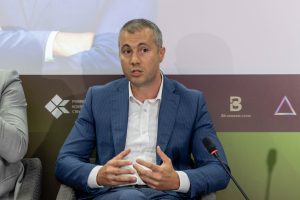
Ivan Bauk of NLB Bank stated that the banking sector recognises the importance of the north and does not believe that the region is lagging behind in terms of support from financial institutions.
“Companies from the north may lack experience in preparing business plans and complete documentation that should be presented to banks in order for good ideas to become successful business ventures,” Bauk said. He pointed out that NLB Bank has further strengthened its capacities for working with businesses in the north and plans to continue its educational programmes for entrepreneurs.
Bauk sees tourism and the production of high-quality food, particularly organic food, as the region’s long-term development opportunities.
“Tourism and the production of high-quality food can become a long-term advantage for the north and the foundation of sustainable business,” Bauk said, adding that the completion of investments in ski resorts and the continued construction of the motorway would encourage new investments in hospitality, trade and construction.
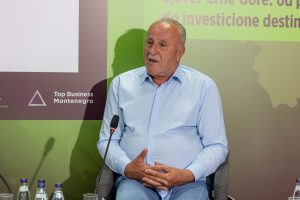
Hasan Ramović, Executive Director of Put-Gross, a company that has been operating for almost four decades, assessed that the greatest challenge facing the north is securing a creative and highly skilled workforce.
“The potential of the north has been neglected, the region has lagged behind in development for years, and young people are leaving for places where they can demonstrate their knowledge and skills,” Ramović said.
He emphasised that operating in an environment marked by frequent changes in tax policy and business uncertainty is particularly challenging today.
“In such circumstances, successful companies are those that confront problems and manage to find solutions,” Ramović said.
Speaking about agriculture, he warned that domestic producers cannot easily compete with imported goods without systemic support.
“Our agricultural production is traditional and does not generate high returns. If our potatoes cost one euro, while potatoes from the Netherlands arrive at a price of 20 cents, our farmers cannot be competitive, regardless of the fact that they offer a higher-quality product,” Ramović said.
According to him, the development of rural infrastructure and the creation of better living conditions in rural areas are prerequisites for the recovery of the north.
The event in Bijelo Polje was the first regional edition of the TBM Business Talks platform, organised by the Top Business Montenegro initiative. The next event is planned for September in the southern region of the country, completing the platform’s regional concept and covering the development potential of all parts of Montenegro.

