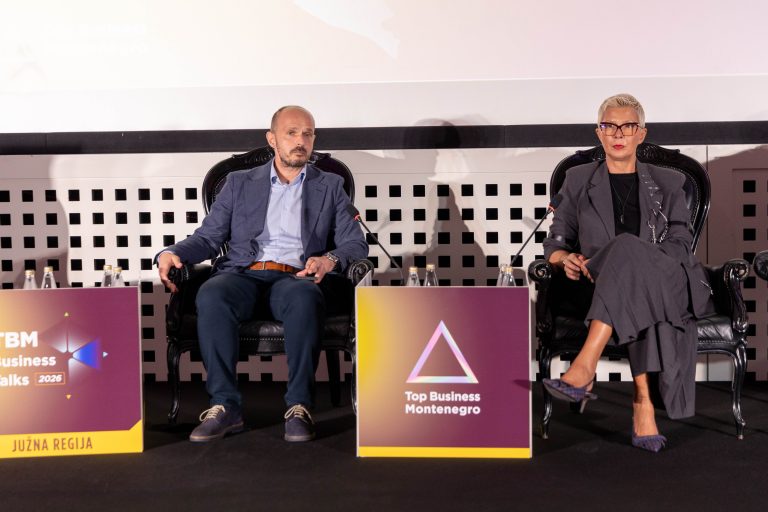
DEVELOPMENT IS NOT A SOLO GAME: BUSINESS AND LOCAL GOVERNMENTS MUST BE PARTNERS
Montenegro must change the way it approaches local development, as its success cannot be measured solely by the number and value of investments, but also by what those investments bring to citizens, businesses and local communities. At the same time, the voice of the business community and citizens must be more strongly incorporated into planning and decision-making processes.
These were among the key messages of a one-on-one conversation between economic analyst Mirza Mulešković and Aleksandra Kiković, Team Leader for Inclusive and Green Development at UNDP Montenegro, held under the title “Development Is Not a Solo Game: Who Is Building the Future of Our Cities? How Can We Align Investments, Local Needs and Sustainability?” as part of the TBM Business Talks – Southern Region business event in Bečići.
The discussion focused on the extent to which Montenegro has succeeded over the past two decades in translating investment capital into tangible local development, as well as on the extent to which businesses and citizens are involved in decisions concerning the development of their communities.
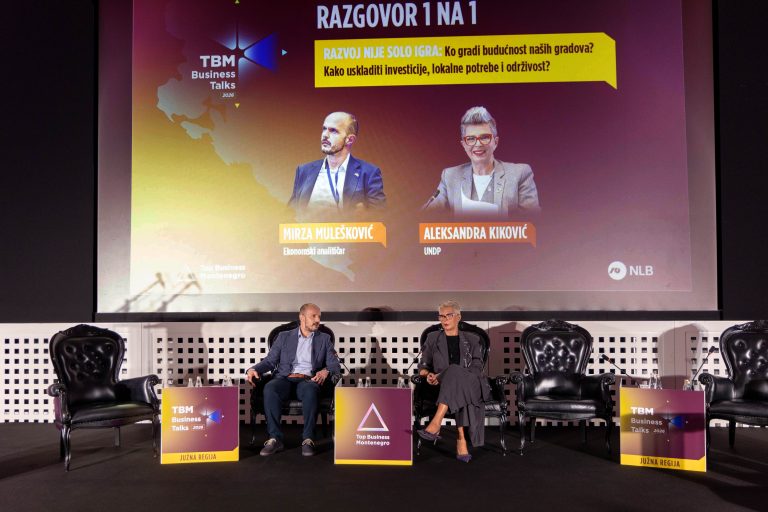
Mulešković pointed out that the southern region is home to almost 44,000 business entities and represents one of the key drivers of Montenegro’s economy, while more than €16 billion in foreign direct investment has entered Montenegro since the restoration of independence. The key question, he noted, is how effectively this capital has been used over the past 20 years and what local development means today.
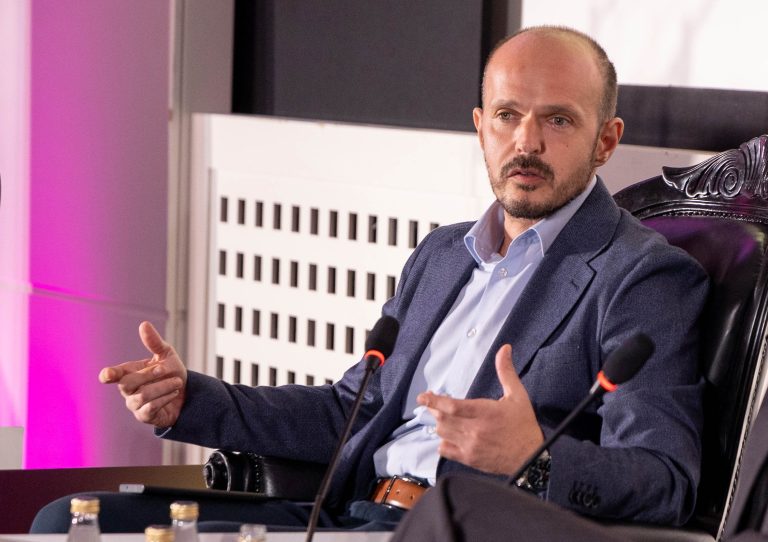
“Without a strong economy, it is difficult to have strong institutions, and without strong institutions there can be no progress. Businesses need an efficient, fast and predictable business environment. Without communication and cooperation between businesses and local and national institutions, it is difficult to move forward and build sustainable development,” Mulešković said.
Kiković stressed that development cannot be reduced simply to the number of investments.
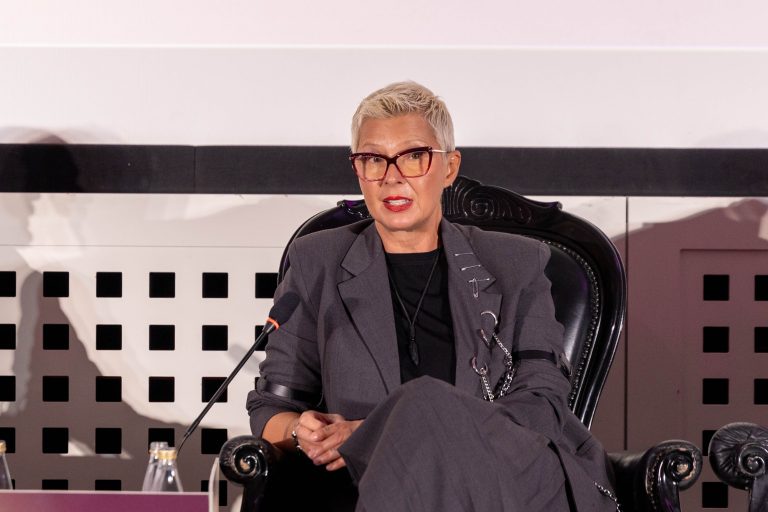
“The real question is how much better we live today, how many opportunities we have created to continue working and how much local government supports the development of different forms of economic activity,” Kiković said.
For the business community, she noted, a stable environment is of critical importance, while constant changes in rules and responsibilities make planning and doing business more difficult. She particularly highlighted insufficient communication between local governments and the business sector, noting that development policies and strategies are often designed without adequately involving those who are expected to implement them in practice.
Kiković also believes that existing models for involving citizens and the business community in decision-making are outdated, particularly in an era of accelerated digitalisation. While technology and artificial intelligence are developing rapidly, institutional systems often struggle to keep pace.
Another challenge she identified is the relationship between the national government, local authorities and the business sector. Local governments are often assigned new responsibilities without being provided with adequate financial capacity, while at the same time being required to comply with national regulations and procedures.
“Private business is always caught between the national and local administrations,” Kiković said.
For this very reason, she believes that the answer “it cannot be done” should not be the end of the conversation. “The worst reaction to any situation is to say: ‘It doesn’t depend on me; that’s what the person above, to the left or to the right says.’ The answer ‘it cannot be done’ should always be questioned,” Kiković stressed.
Speaking about the green transition, she emphasised that it should not be viewed solely as a regulatory obligation, but as part of modern and smart business practices. According to Kiković, Montenegro has achieved significant results in the field of climate policy and is well positioned compared with many countries, but substantial work remains to be done in the areas of energy transition, energy efficiency and the use of renewable energy sources.
The local level, she noted, is ultimately where policies are translated into the everyday lives of citizens.
The process of EU accession will further increase the need for strong institutions and effective implementation of legislation. Kiković believes this cannot be achieved without the involvement of all stakeholders in society, particularly the business community.
Among the key priorities for the next two to five years, she identified a stable regulatory and institutional framework, a stronger voice for the business community, and more open communication between businesses and public administration.
The one-on-one conversation was held on 22 September at the Splendid Hotel as part of the second regional edition of TBM Business Talks – Southern Region, dedicated to the theme “The Southern Region: Between Investment Momentum and Sustainable Development.”
By organising TBM Business Talks events in Bijelo Polje and Bečići, with the support of NLB Bank as the general sponsor of this year’s Top Business Montenegro programme, the platform concluded this year’s regional concept, creating space for discussion on the development potential and challenges facing different parts of Montenegro.